




Why is Tunceli Honey Different? A Real Answer with Figures and Data
iksor · April 2026 · 8 min read
You've often heard the phrase "Tunceli honey is special." But what lies behind this difference—geography, flora, or production method? In this article, we let data speak, not claims.
Munzur's geography is not an accident, but a design
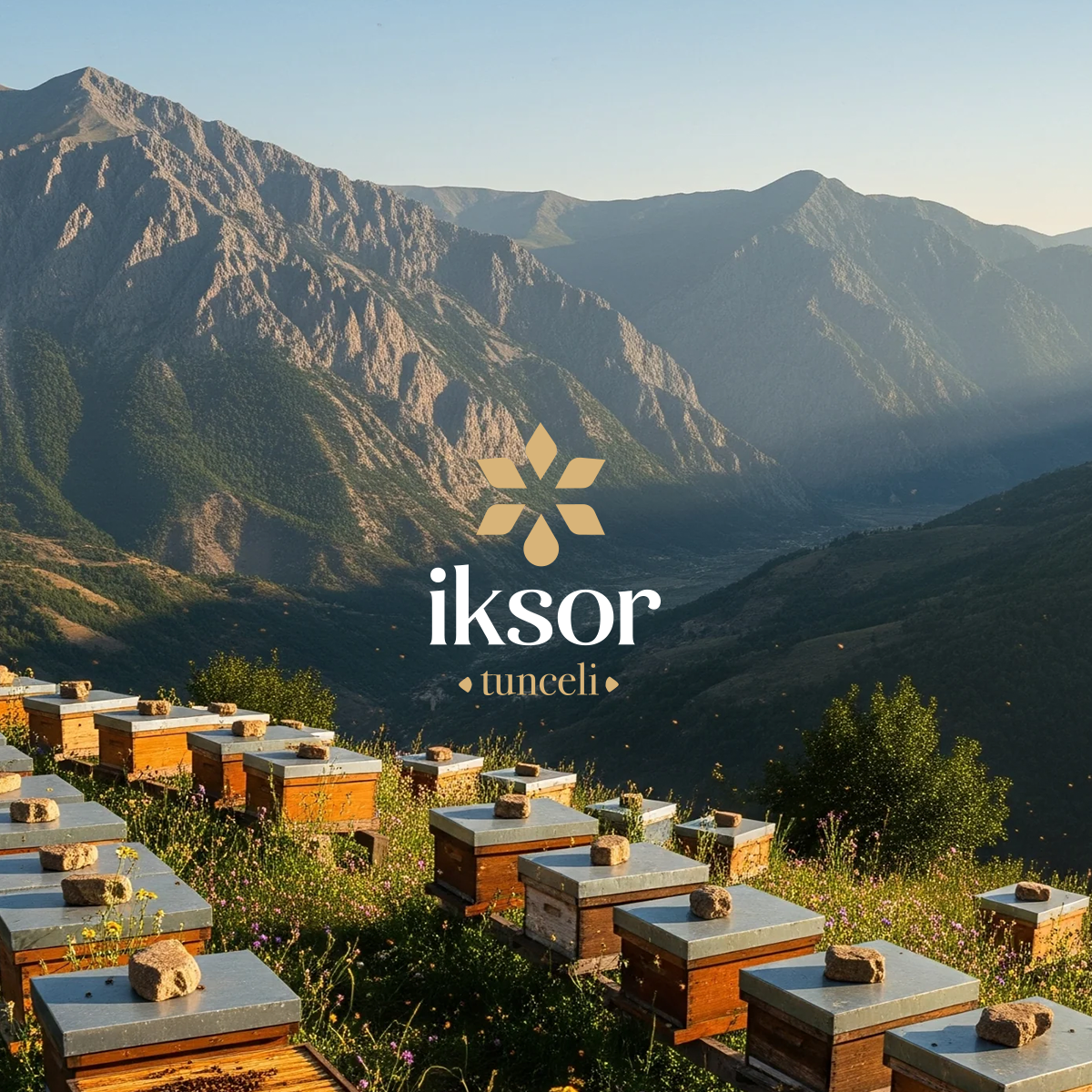
Tunceli, one of Turkey's most rugged and difficult-to-reach provinces, turns this difficulty into an advantage. The Munzur Mountains, an extension of the Taurus Mountains, stretch 130 kilometers from west to east, with peaks reaching 3,300 meters. This mountain system, home to glacial lakes, oak forests, and countless streams, is one of Turkey's unique areas not only for its scenery but also for its flora.
The flora of Munzur Valley National Park has 1,518 different plant species recorded; 43 of these are endemic only to the Munzur Mountains, and 227 are endemic only to Turkey. When bees collect nectar and pollen from this flora, a much richer biochemical profile emerges than honey produced by bees feeding on a single type of plant.
The numbers of Ovacık district
Ovacık district of Tunceli is the most intensive beekeeping region in the province. Today, there are 197 registered producers in the district, producing geographically indicated Munzur Honey in 20,189 hives. In spring, beekeepers from various provinces of Turkey obtain the necessary permits and stay in the plateaus of the Munzur Mountains; they look after their bee colonies here for a few months, then carry out the harvest.
"Ovacık has mountains on one side and forests on the other. When the flowers in the mountains are gone, the flowers in the forests bloom." — Hacı Kocamış, a producer beekeeping in Ovacık since 1994
This plant cycle ensures that bees have access to continuously varied nectars throughout the season. A constantly changing resource pool instead of a monotonous flora – this difference is directly reflected in the complexity of the honey.
Flora: thyme, çarşır, tragacanth, and more
The main plants grown in the region include thyme, çarşır (ferula species), and tragacanth. These three plants are the most important sources that shape the characteristic aroma of Tunceli honey.
| Plant Source | Contribution to Honey | Presence in the Region |
|---|---|---|
| Thyme | Thymol and carvacrol — antimicrobial effect | Widespread |
| Çarşır (Ferula) | Characteristic aroma, volatile oils | Endemic |
| Tragacanth | Rich protein content, dark color | Widespread |
| Rhododendron | Grayanotoxin (this is where the different taste of honeycomb comes from) | Varies by district |
| Wild mint | Menthol components, refreshing aroma | Widespread |
What does geographical indication registration mean?
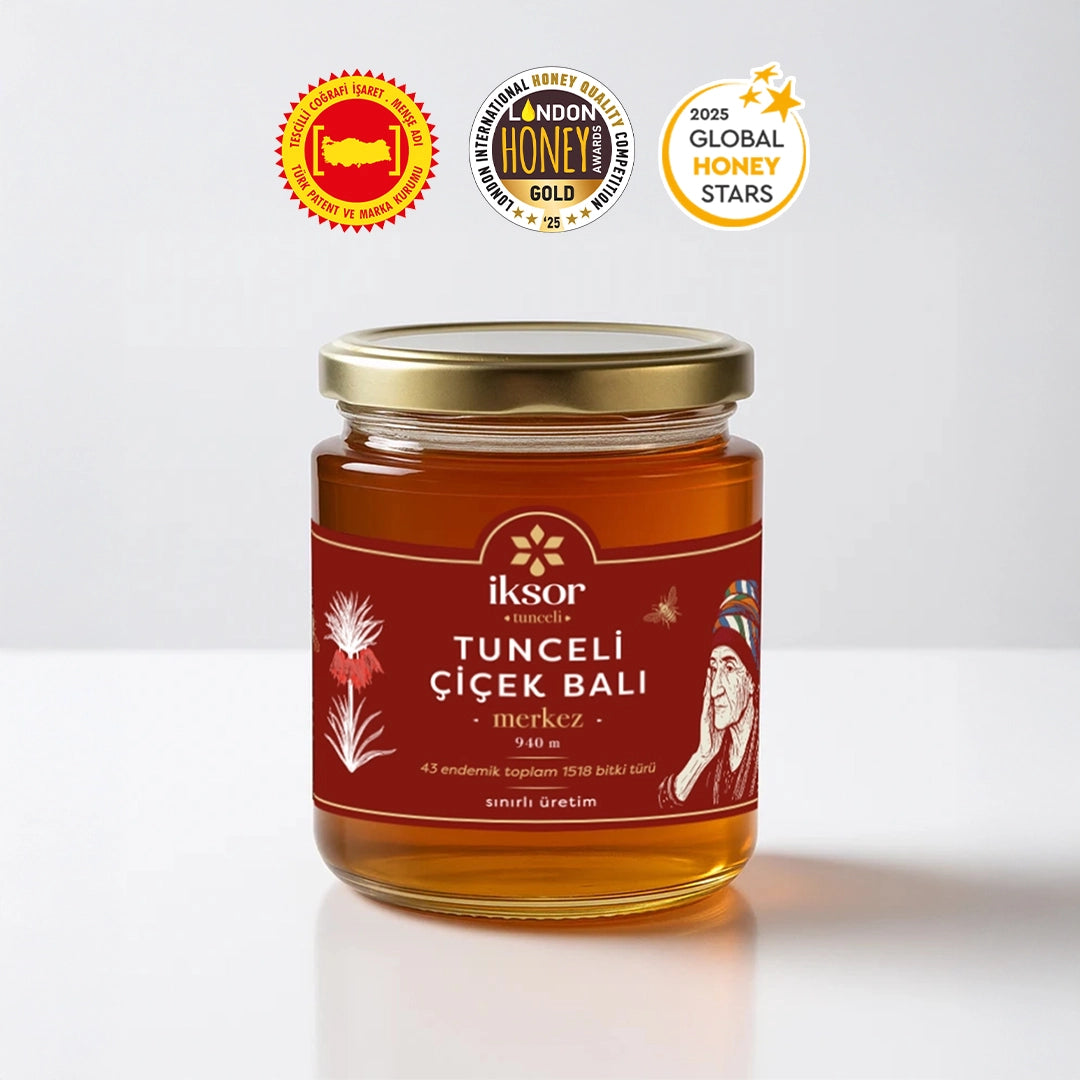
Munzur Honey has received geographical indication registration from the Turkish Patent and Trademark Office. This registration is not just a label: to bear the name Munzur Honey, the honey must be produced within defined geographical boundaries and meet specified quality criteria. Like the wine from the Champagne region of France — the name is protected.
Honey trust crisis in Turkey: why it matters
To understand the difference of Tunceli honey, one must look at the general picture in Turkey. The Ministry of Agriculture and Forestry regularly updates its list of imitation and adulterated products, exposing multiple honey brands in each update period. In the 2024–2025 period, sugar syrup and chemical additives were detected in many "organic flower honey" and "strained honey" products sold in chain supermarkets.
Ziya Şahin, President of the Central Union of Turkish Beekeepers, describes the market directly with these words: 'Illicit fake honey has flooded the market.' This is where the story of cheap honey on the supermarket shelf ends.
What proves the authenticity of honey?
Most tests circulating online as "methods to tell real honey at home" are scientifically inadequate. According to the International Honey Commission (IHC) standards and the Codex, the parameters a quality honey should meet are as follows:
| Parameter | Codex Standard | Meaning |
|---|---|---|
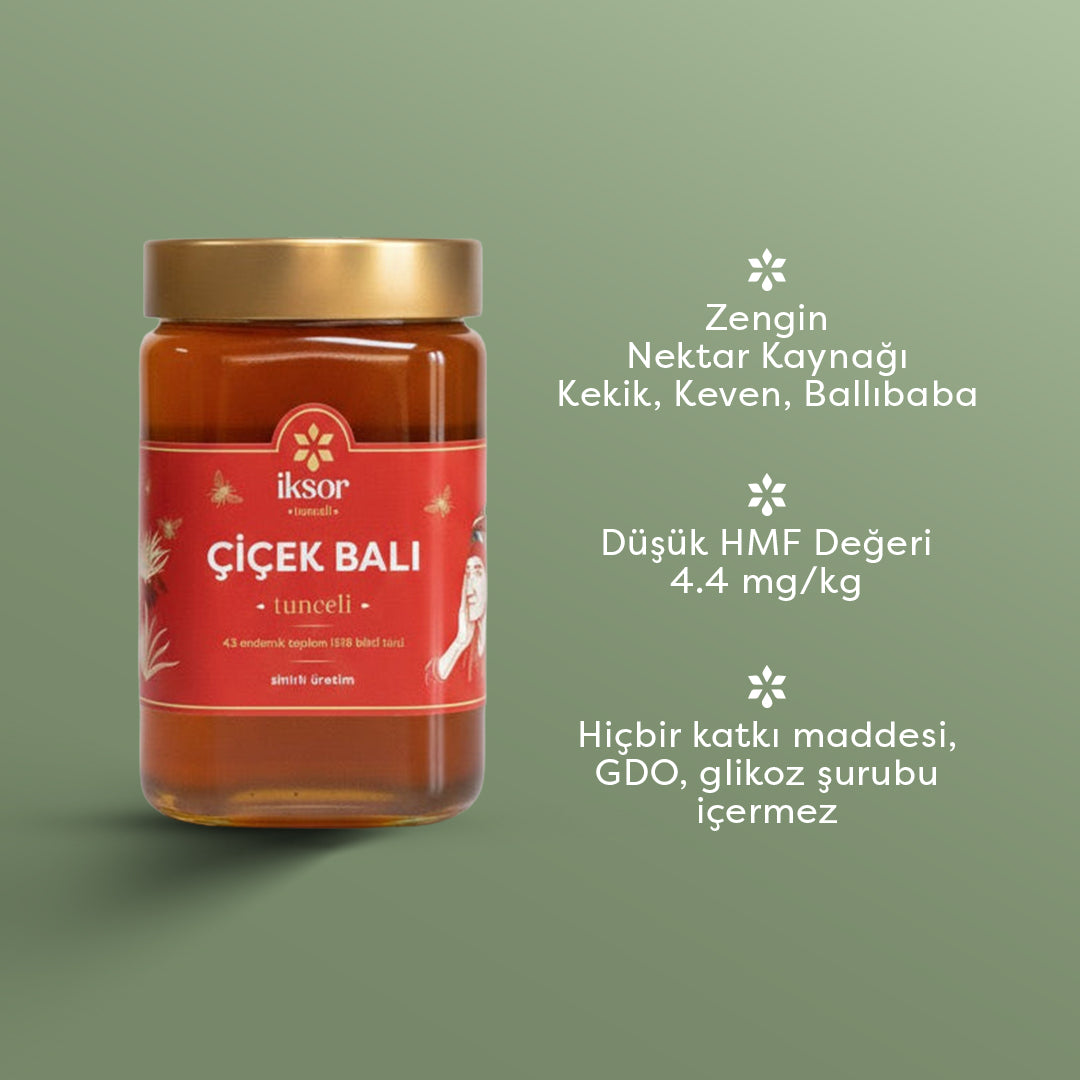
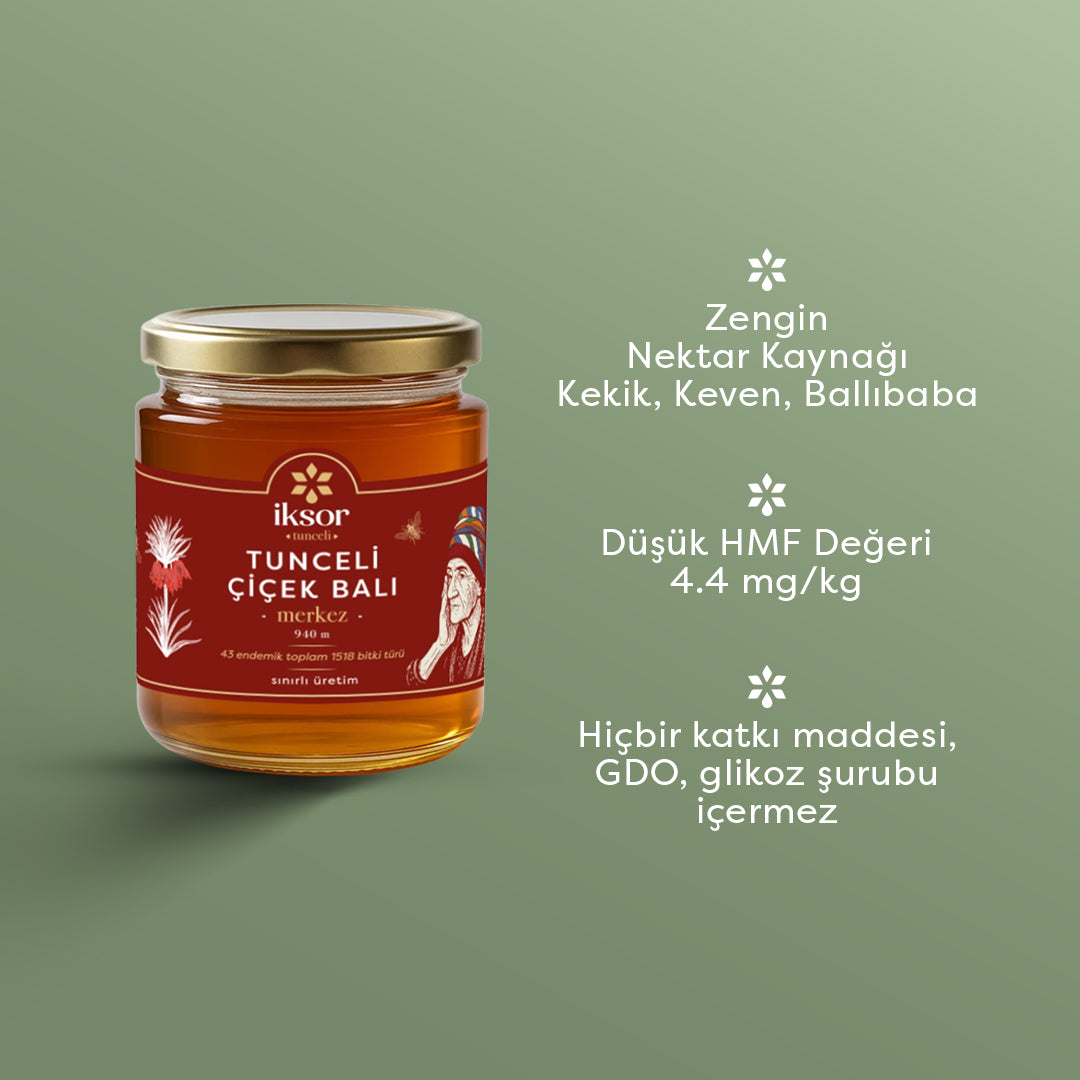
| HMF | ≤ 40 mg/kg | Indicator of heat treatment or aging; low value indicates freshness |
| Diastase activity | ≥ 8 Schade units | Enzyme viability; decreases in heat-treated honeys |
| Free acidity | ≤ 50 meq/kg | Control of fermentation and spoilage |
| C4 sugar | 0.00% (ideal) | Proof that no sugar syrup has been added |
| Moisture | ≤ 20% | Crystallization and shelf life |
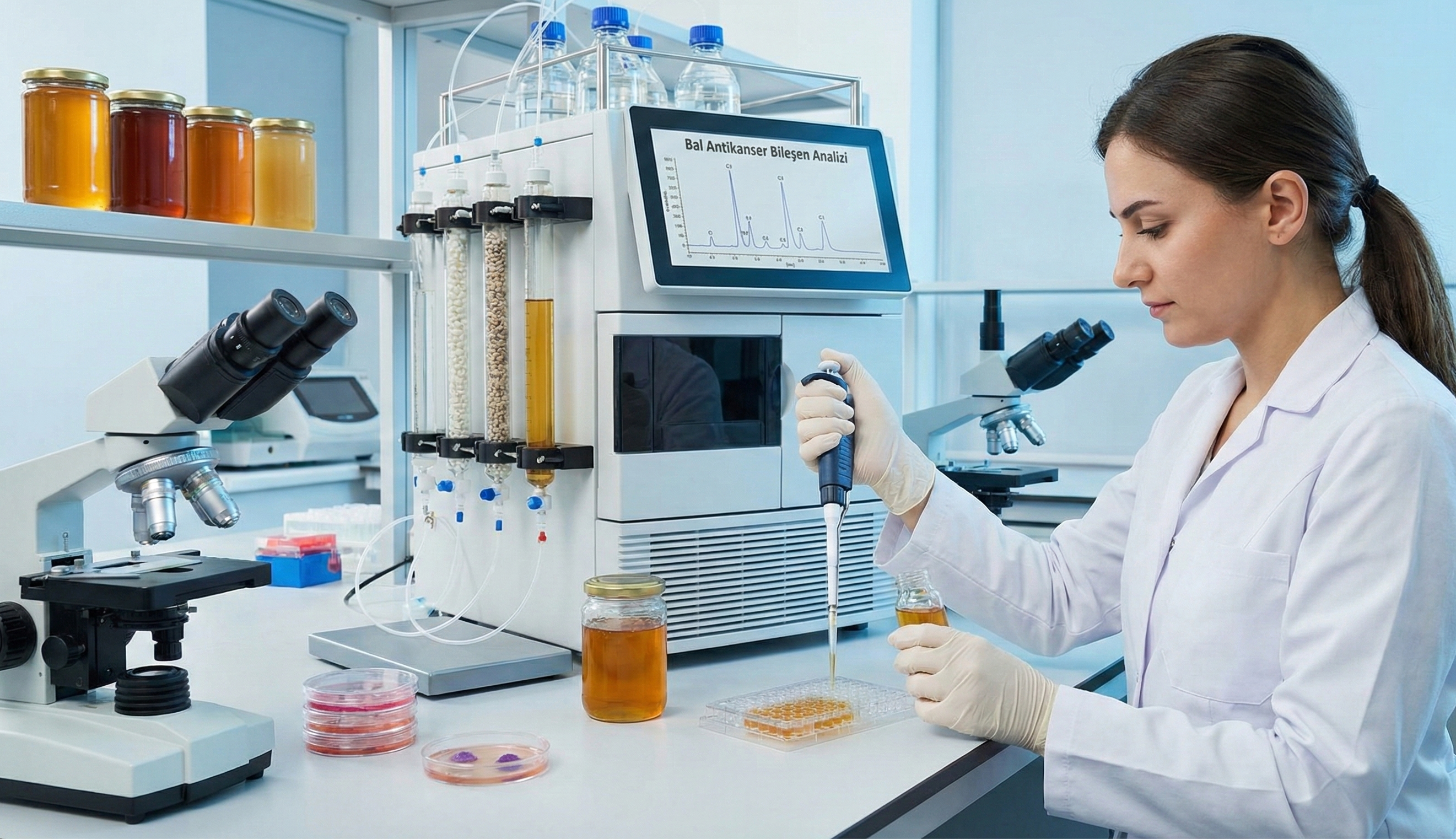
The analysis reports of iksor honeys from the Ministry of Agriculture and Forestry meet all these parameters. The proline value is 707.91 mg/kg, Sucrose/Saccharose is undetectable, and the figures are publicly shared.
What changes from district to district?
| District | Outstanding Feature |
|---|---|
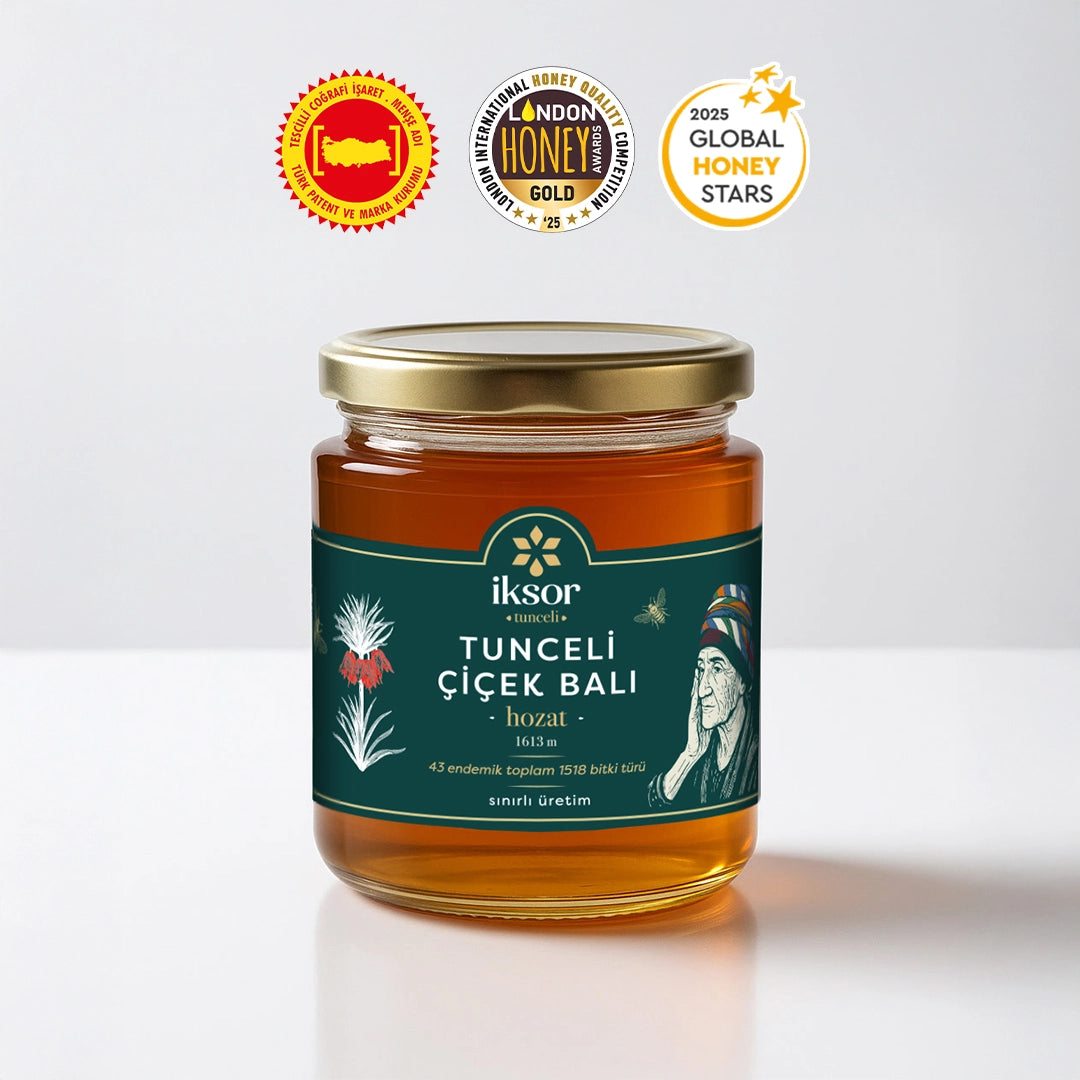
| Hozat | High altitude, dense thyme flora, dark color |
| Ovacık | Core production area for geographically indicated Munzur Honey |
| Pülümür | 2,000–3,000 m plateaus, rich wild flower diversity |
| Nazımiye | North slope, different moisture balance, light aroma |
| Pertek | Milder climate, early flowering |
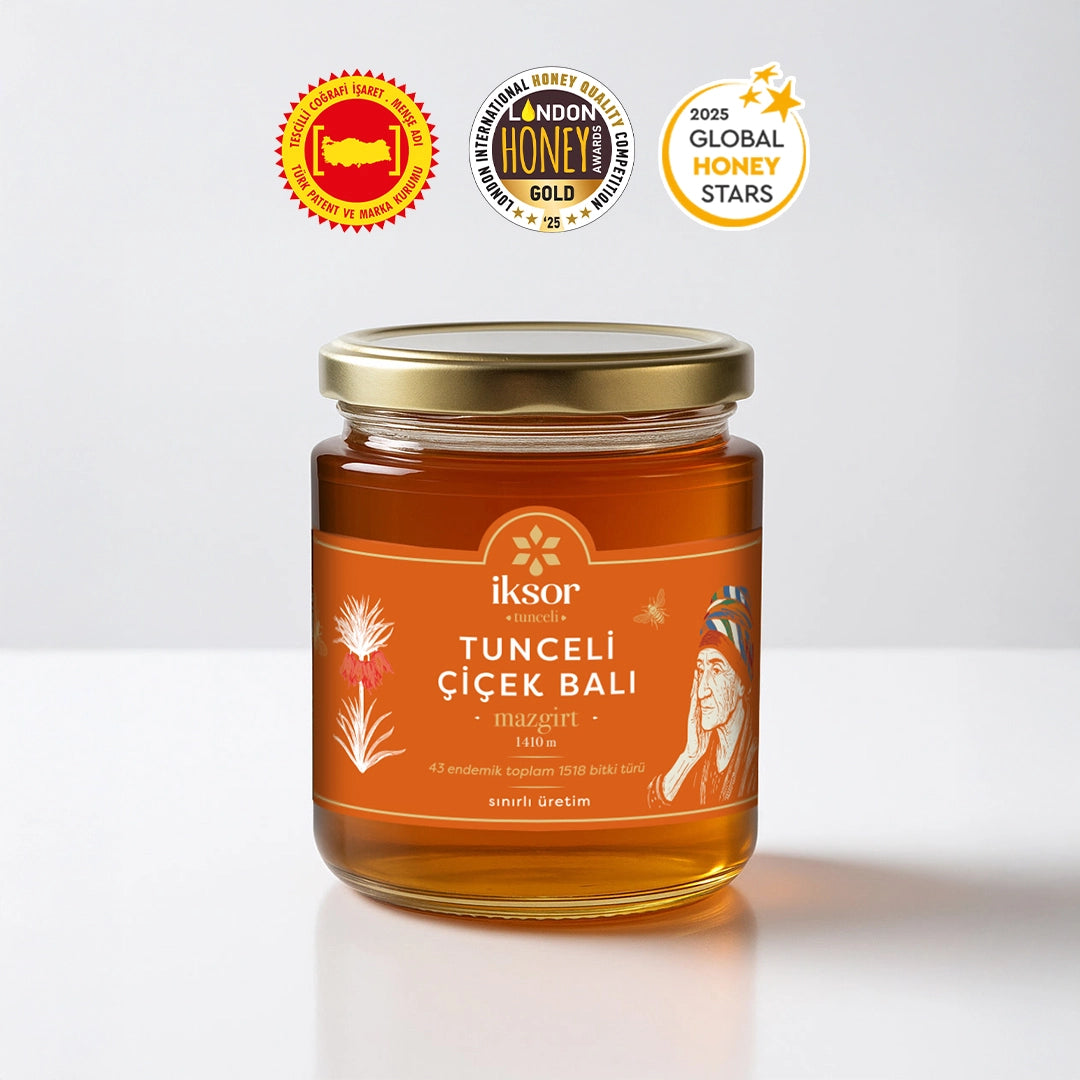
| Mazgirt | South-facing slopes, wild mint-dominated flora |
| Çemişgezek | Transitional climate, multi-layered nectar source |
| Central | Munzur Valley influence, balanced profile |
Why is honeycomb different?
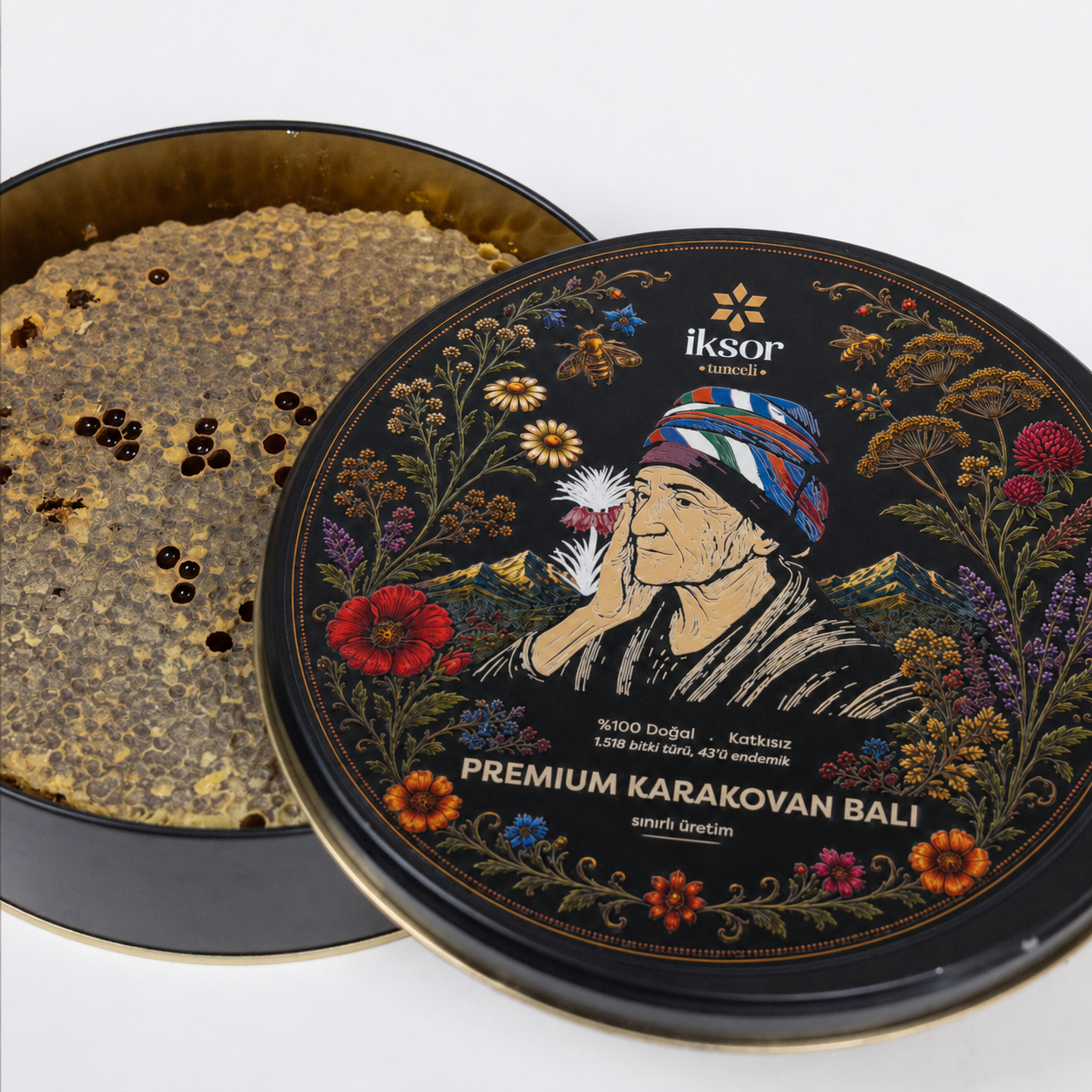
Unlike modern Langstroth hives, honeycomb allows bees to work without disturbing their natural behavior and with minimal human intervention. Bees manage the comb structure, the capping rhythm, and the internal hive temperature entirely by themselves. The result: raw honey with high enzyme activity, untouched by heat, and remaining in contact with beeswax and propolis.
Conclusion: what does the data say?
When the data is examined, the answer is yes—but a conditional yes. The geography of Munzur, its high altitude, 1,518 recorded plant species, and 227 endemic species are real. The geographical indication registration is real. The chemical profile of honey produced in this region can be confirmed by analysis reports to be different from honey produced in flat agricultural areas or near industrial sites.
But geography alone is not a guarantee of quality. The difference in method, harvest timing, and storage from producer to producer is directly reflected in the honey. Therefore, consumers who ask about traceability and analysis reports, not just origin, are asking the right question.
Analysis report for each jar, the story of each producer.
Explore Products